

By: Natalie Kravitz, BA, ACC, CDP, DCS, DCSCT, PAC Engagement Leader
Let’s be honest, sometimes you just can’t run the program you planned. A last-minute staffing issue. A medical emergency. A surprise survey. Life happens.
But when cancellations become a habit, even unintentionally, they can send the wrong message: “This might not be worth showing up for.” And that’s not the message we want to give residents or our teams.
More Than a Missed Moment: What It Really Means
Canceling a program isn’t just about one lost hour. It shapes how residents view the calendar, how staff perceive the value of engagement, and how your community experiences connection.
Here’s what begins to fade when cancellations pile up:
1. Resident Trust
For many residents, especially those living with dementia, depression, or anxiety, especially those living with dementia, depression, or anxiety routine is a comfort. When an activity they’ve looked forward to suddenly disappears, it can feel like a broken promise. Over time, that chips away at trust.
“My mother waited all morning for that painting class. When it didn’t happen, she just went back to bed.”
— Family member feedback, memory care community
2. Calendar Credibility
When residents start thinking the calendar is “just a suggestion,” participation drops. And when participation drops, it becomes tempting to cancel even more. It’s a cycle that’s tough to break, but not impossible.
3. Staff Morale
Frequent cancellations can make team members feel like engagement isn’t a priority. That’s hard to hear when they’ve put time, care, and creativity into planning something meaningful. It wears down morale fast.
When Canceling Feels Unavoidable
You can’t control everything, but you can control how you respond.
Here’s a quick gut check:
If the roles were reversed—if you were the resident—would you feel seen, respected, and valued in how the change was handled?
If not, there’s room to adjust the approach.
Five Grounded Ways to Stay Consistent
Even on the most unpredictable days, there are ways to preserve the spirit of connection. Try these strategies when your original plan can’t go forward:
1. Keep a “Plan B” Drawer
Fill a small bin or folder with reliable backups: coloring pages, trivia cards, simple crafts, music playlists, or sensory activities. They may not be the main event, but they can still bring joy and engagement.
2. Scale Down, Not Out
Can’t host the full group? Downsize the format instead of canceling altogether. Offer one-on-one visits, self-led activity stations, or a casual chat corner. The goal is to honor the time slot and the expectation.
3. Empower Resident Leaders
Some residents love to take the lead. Let them! A resident-run card game, trivia session, or storytelling circle not only maintains consistency but also builds confidence and purpose.
Teepa Snow and her team at Positive Approach to Care teach the 5 P’s: People, Place, Programming, Props, and Possibilities. When we lean into possibilities, everyone wins.
We once had a resident who never joined any group programs until we asked him to host baseball hour. Watching him light up and say “yes” was everything.
4. Communicate Clearly and Kindly
If you must cancel, communicate early and honestly. Let residents know why and when they can expect a makeup opportunity.
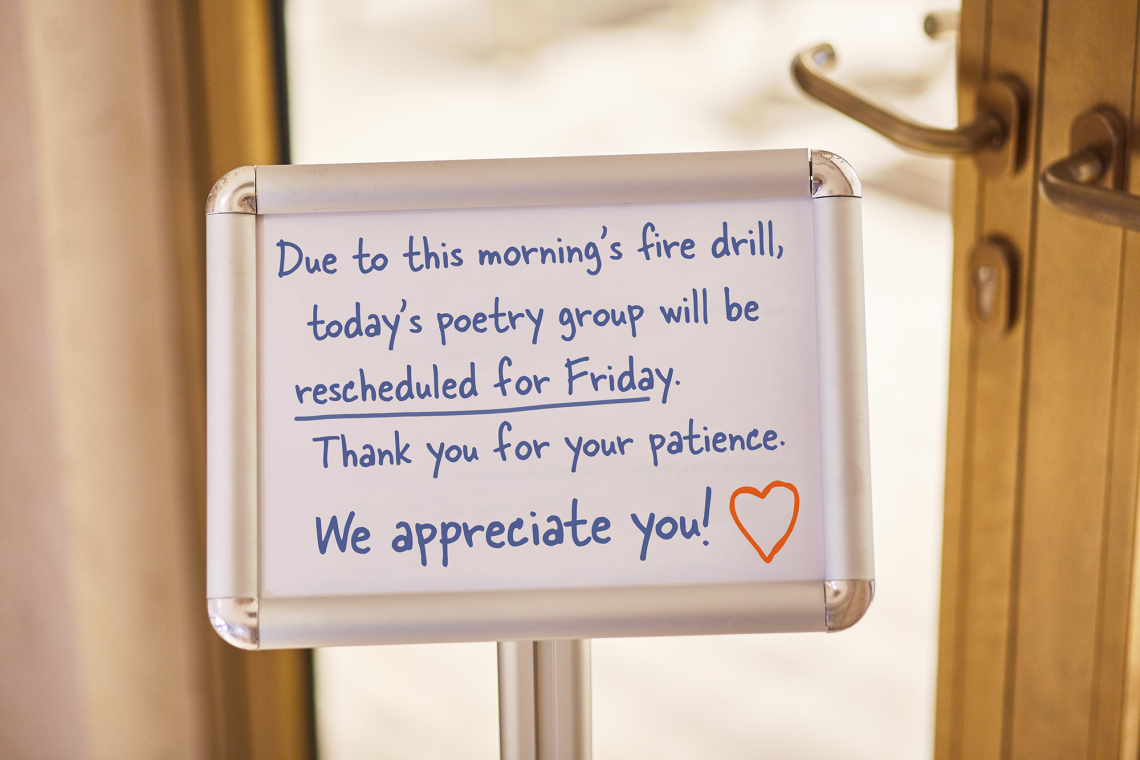
“Due to this morning’s fire drill, today’s poetry group will be rescheduled for Friday. Thank you for your patience. We appreciate you!”
5. Celebrate What Did Happen
Even if the planned activity didn’t run, take a moment to honor the time together. Maybe it turns into an impromptu music session, a hallway sing-along, or a cup of coffee with conversation. Those small moments still matter.
Final Thoughts: The Power of Showing Up
When we protect engagement time with care, even when plans shift, we’re really saying:
“You matter. This time matters.”
Cancellations will happen, but they don’t have to become the norm. With a little creativity, flexibility, and teamwork, we can keep the calendar alive, trusted, and meaningful.
The activity isn’t just the trivia or the craft or the music.
It’s also the trust behind it. The gathering. The shared moment of “We’re in this together.”
And that’s something we can’t afford to cancel.
Keep the Connection Alive
Even when the plan changes, the purpose stays the same. With a few creative backups and a flexible mindset, you can turn a canceled program into a moment of connection and care.
Subscribe to our newsletter for expert insights, adaptable programs, and practical strategies to support engagement and connection wherever care happens.
Natalie Kravitz, Director of Engagement Operations for Activity Connection, has over 20 years of senior living experience and is passionate about person-centered engagement. She serves on multiple professional boards, is a Dementia Connection Institute Ambassador and Trainer, and holds numerous industry certifications.
One response to “Senior Activities Canceled? 5 Creative Fixes That Keep Residents Engaged”
-
thank you very much for all the wonderful ideas you place on this website for Activities Directors like myself can reference.
much appreciated!





Leave a Reply