

By Sarah Vanbuskirk
America’s 250th anniversary offers a unique opportunity to celebrate not only our nation’s history but also the personal stories of the people who have lived through decades of it.
For senior living communities, Independence Day can become much more than a patriotic holiday filled with decorations, music, and cookouts. It can be an opportunity to honor residents’ experiences, strengthen connections, and create meaningful person-centered engagement through storytelling activities for seniors.
Whether residents served in the military, raised families, built careers, volunteered in their communities, or simply witnessed decades of American history unfold, each person has a story worth sharing, and America’s 250th birthday is the perfect time to hear it.
Why Storytelling Matters in Senior Living
Storytelling is more than a pleasant social activity. It helps residents reflect on their lives, connect with others, and preserve meaningful memories.
Research has shown that reminiscence and life-review activities can support emotional well-being, reinforce identity, and encourage social engagement among older adults. For many residents, sharing memories provides a sense of purpose and an opportunity to leave a legacy.
Storytelling activities can help:
- Improve mood and self-esteem
- Reinforce personal identity
- Reduce feelings of loneliness
- Encourage social interaction
- Strengthen community connections
- Create opportunities for meaningful engagement
For veterans, storytelling can be especially powerful. Sharing memories of military service allows residents to reflect on their contributions while helping others better understand their experiences.
As activity professionals know, some of the most meaningful programming happens when residents become the focus rather than the audience. Storytelling naturally creates those moments.
Using July 4th as a Gateway to Reminiscence
Independence Day is filled with sights, sounds, smells, and traditions that can unlock memories.
A simple question such as “What is your earliest Fourth of July memory?” can spark conversations that lead to stories about family gatherings, military service, childhood celebrations, hometown traditions, and major life events.
Consider using sensory prompts to encourage reminiscing:
- Patriotic music
- American flags
- Vintage photographs
- Fireworks videos
- Picnic baskets
- Red, white, and blue decorations
- Watermelon, lemonade, or barbecue aromas
- Newspaper clippings from past decades
Sensory experiences often trigger memories that residents may not recall through conversation alone, making them valuable tools for both independent and assisted living settings. They can be especially helpful for residents living with memory loss, as familiar sights, sounds, and scents often unlock memories and emotions that might otherwise remain difficult to access.
Easy Storytelling Activities for Seniors
One of the best things about storytelling programming is that it requires very little preparation while offering significant engagement.
1. Story Circles
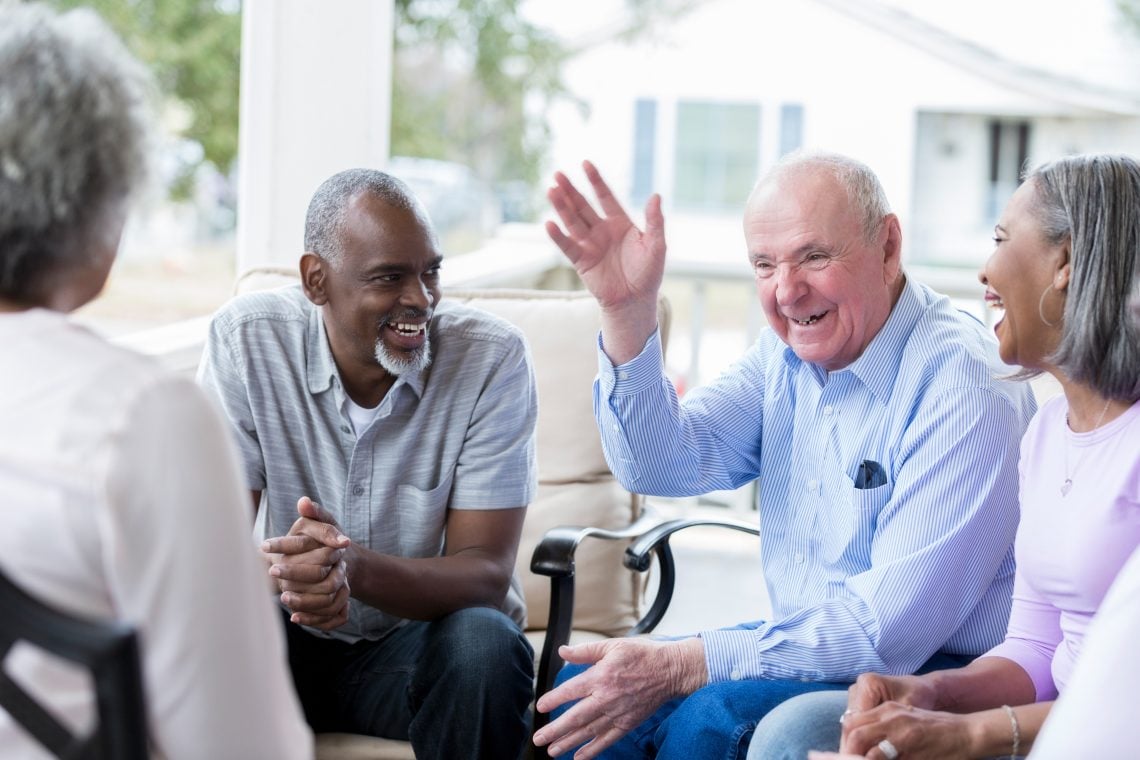
Gather 5–10 residents in a comfortable setting and introduce a discussion prompt.
Possible prompts include:
- What is your favorite Fourth of July memory?
- What traditions did your family have growing up?
- What does freedom mean to you?
- What historical event had the greatest impact on your life?
Allow each participant time to share while keeping the atmosphere relaxed and conversational.
2. Sensory Memory Stations
Create themed stations around the room that encourage residents to explore memories through objects and images.
Examples include:
- Military service
- Family celebrations
- Hometowns
- Favorite holiday foods
- Childhood summers
Residents can rotate between stations and share stories inspired by each theme.
3. One-on-One Reminiscence Sessions
Some residents may be more comfortable sharing personal memories in a smaller setting.
Staff members, volunteers, family members, or interns can facilitate brief one-on-one conversations using photographs, keepsakes, or simple prompts.
This approach works especially well for residents with cognitive decline who may become overwhelmed in larger groups.
4. Community Story Exchange
Pair residents together and ask them to interview one another.
Afterward, each participant introduces their partner to the group by sharing one interesting story they learned.
This activity promotes listening skills, relationship-building, and community engagement.
Storytelling Prompts That Inspire Conversation
Whether you’re facilitating a group discussion, one-on-one reminiscence session, or community storytelling event, thoughtful prompts are often all you need to get meaningful conversations started.
Independence Day Prompts
- What is your earliest Fourth of July memory?
- How did your family celebrate Independence Day?
- What foods remind you of July 4th?
- What does the American flag mean to you?
- What Fourth of July celebration stands out most in your memory?
- What historical event do you remember most vividly?
Veteran-Focused Prompts
- Where did you serve, and what was your role?
- What was life like during your service years?
- How did you celebrate holidays while serving?
- Who had the biggest impact on you during your military experience?
- What lessons did you learn through service?
General Life Story Prompts
- What accomplishment are you most proud of?
- Who influenced your life the most?
- What advice would you give younger generations?
- What invention or technology changed your life?
- What was your first job?
Preserving Resident Stories
Capturing stories does not need to be complicated.
Simple methods include:
- Taking notes during conversations
- Recording audio on a smartphone
- Recording short videos
- Using voice-to-text apps
- Collecting written memories
The goal is not perfection. The value comes from preserving authentic experiences and ensuring residents feel heard.
Families often treasure these stories, especially when they capture memories that may never have been documented before.
Creative Ways to Share Resident Stories
The engagement doesn’t have to end when the activity concludes.
Consider creating:
Voices of Independence Bulletin Board
Feature resident quotes, photographs, and memories from July 4th celebrations throughout the years.
Community Storybook
Compile stories into a printed booklet that can be shared with residents and families.
Digital Memory Collection
Create simple slideshows using photos, recorded audio, and written memories.
Resident Legacy Project
Expand storytelling into a year-round initiative by collecting memories monthly and organizing them by theme.
Topics might include:
- Childhood memories
- Family traditions
- Career experiences
- Military service
- Travel adventures
- Holiday celebrations
Over time, these stories become a valuable record of the community’s collective history.
Tips for Successful Storytelling Programs
Successful storytelling activities for seniors don’t require elaborate planning.
Keep these best practices in mind:
- Use open-ended questions.
- Allow residents to share at their own pace.
- Respect emotional boundaries.
- Recognize that some memories may be difficult.
- Adapt activities to different cognitive abilities.
- Incorporate sensory cues whenever possible.
- Celebrate every story without judgment.
Most importantly, remember that there are no right or wrong answers. The purpose is connection, not performance.
Continue the Storytelling with Daily Journaling
Storytelling doesn’t always have to happen out loud. While group discussions can spark meaningful connections, some residents prefer to reflect privately before sharing their experiences with others. Journaling offers another powerful way to preserve memories, express emotions, and capture personal stories over time. For residents who may feel intimidated by traditional writing, starting small can make all the difference.
Our 10-Words-a-Day Journal activity helps residents capture memories, reflect on daily experiences, and build a simple storytelling habit by writing just 10 words each day. It’s an easy, low-pressure way to encourage reminiscence, self-expression, and meaningful engagement for writers and non-writers alike.
A Meaningful Way to Celebrate America’s 250th
As communities across the country celebrate America’s 250th anniversary, senior living professionals have a unique opportunity to highlight the voices of those who have witnessed so much of that history firsthand.
Storytelling activities for seniors transform residents from participants into contributors. It reinforces dignity, fosters belonging, and strengthens community relationships.
This Independence Day, consider making storytelling part of your life enrichment programming. The stories shared may become some of the most meaningful moments of the celebration, not only for residents but also for staff, families, and fellow community members.
While America has many famous stories, some of the most important ones are sitting right in front of us, waiting to be told.
Sarah Vanbuskirk is a writer and editor based in Portland Oregon.





Leave a Reply