

By Kathy Laurenhue, M.A., CHP
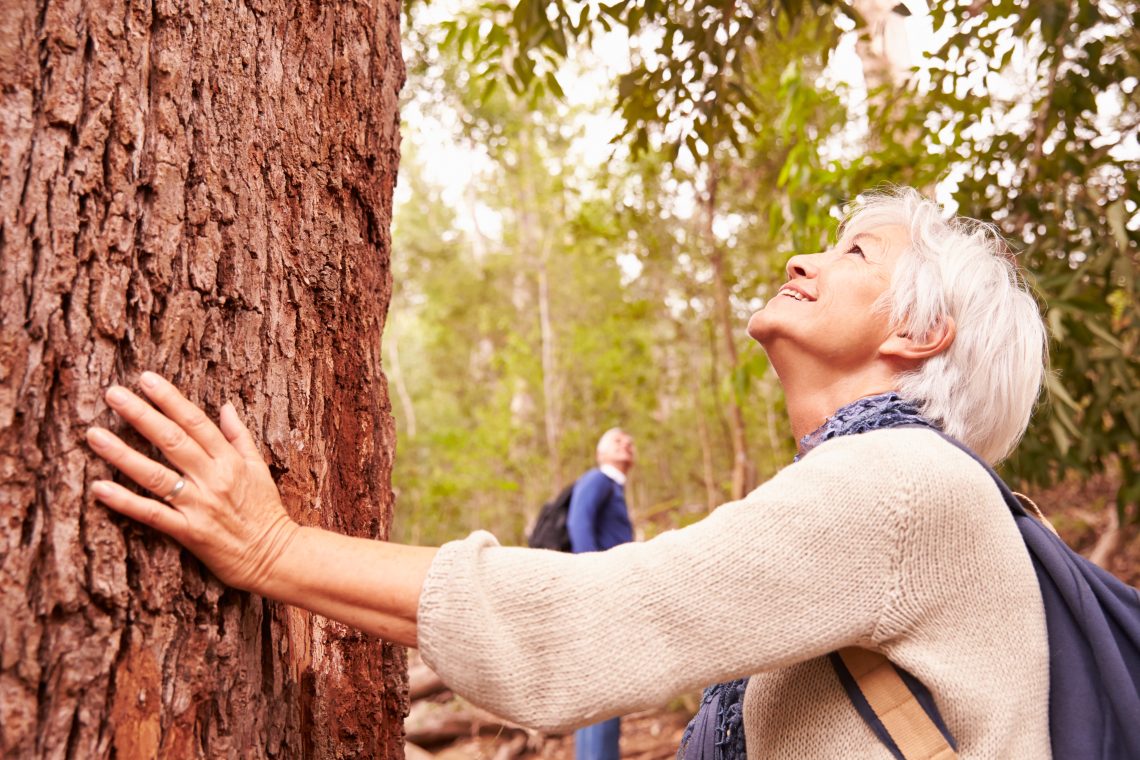
In a world where multitasking has become the norm and attention spans are fleeting, an awe walk invites us to slow down, breathe deeply, and reawaken our sense of wonder. Derived from the spirit of Japan’s shinrin-yoku (forest bathing), awe walks involve not only sitting and quietly observing the beauty of nature but also gentle walking and intentionally noticing new things in our surroundings. It’s like taking a walk with a toddler—one moment they’re captivated by an ant wrestling a crumb on the sidewalk, and the next, they’re just as amazed by the roar of an airplane overhead. Awe walks help us reclaim our childlike curiosity.
Practicing Awe: Beginning Steps
Whether walking alone or leading a group, here’s how to make the experience meaningful for all participants, including a dementia-friendly activity:
- Start with the breath: Invite participants to take three or four deep breaths. This helps us center ourselves and shift into a more mindful state.
- Challenge perceptions: Even on a familiar path, invite walkers to notice something new—a freshly blooming flower, the rough texture of tree bark, or an unexpected sound in the air. In an urban setting, you might highlight an easily overlooked architectural detail on a nearby building.
- Engage the senses: Encourage awareness of colors, sounds, scents, and textures. Is there the fragrance of lilacs? The crunch of leaves from the ground? The buzz of a bee?
- Frame the experience: Again, with a toddler’s enthusiasm and openness. Alternatively, imagine you are seeing through “alien eyes” as if encountering Earth for the first time. Or imagine how a bird or a squirrel would interpret what you are seeing.
- Make it playful: Turn it into a scavenger hunt. Provide a list of things to spot, or allow the walk to unfold organically, inviting each person to point out something they hadn’t noticed before.
- Change the time of your walk when possible: When leading a group, your ability to be flexible about your awe walk’s timing may be limited, but if you can, try walking early or late in the day. You may have watched a thousand sunsets, but with an awe mindset, notice how the clouds’ colors change as they move and as the sun moves lower in the sky. If you are watching it over water, perhaps you feel a sense of quiet mellowness that even seagulls seem to respect.
- Consider getting advice from an expert: Just as a docent in an art museum can help you see more in a painting, a gardener or botanist can point out features of specific plants or trees. This expert can also help you create an awe walk scavenger hunt.
Nature Nurtures
The act of mindful walking is more than uplifting—it benefits both body and mind.
According to the National Association of Rehabilitation Providers and Agencies, mindful walking can:
- Improve mood
- Reduce stress
- Reduce fatigue
- Improve heart health
- Improve sleep
- Promote relaxation and presence
If your community lacks accessible green space, consider organizing a scenic drive to a nearby park or tranquil location where a brief awe walk or forest bathing session can take place.
Create Your Own Awe-Inspiring Spaces
Hopefully, awe is readily visible in the nature that surrounds you, but here are a few ways to add awe to everyday environments:
- Butterfly gardens: Plant flowers known to attract butterflies and observe which ones visit.
- Interactive gardens: Encourage participants to track daily changes in a vegetable, herb, or flower garden. What’s budding? What looks ripe enough to eat?
- Bird-watching corners: Install feeders or baths and note the variety of avian visitors. What new species do you notice each day? Are they all getting along?
- DIY projects: Build and decorate birdhouses or feeders as a group activity.
Intergenerational Awe: Whimsy and Connection
Awe can come from imaginative, whimsical touches:
- Fairy doors: Build them from scratch or purchase them as ceramic molds for your craft group to paint. Hidden at the base of a tree or mounted for easier adult visibility, these doors add a magical element. Decorate them seasonally for continued delight and engagement across generations.
- Painted rock gardens: Create a rock garden with stones that have been painted as a group.
Final Thoughts
An awe walk is more than a senior activity—it’s a mindset. It invites us to slow down and reconnect with the everyday wonders around us. Whether you’re guiding a group or taking a solo stroll, these walks offer powerful and uplifting benefits that resonate with people of all ages.
So, step outside. Awe is waiting.
Ready to take your awe walks to the next level?
Bring along our Nature Scavenger Hunt Checklist and engage all your senses as you explore! It’s a fun, mindful way to notice the beauty and wonder around you—perfect for solo strolls, group activities, or intergenerational walks.
Download our Nature Scavenger Hunt Checklist and let nature surprise you.
Kathy Laurenhue, M.A., CHP, the creator of WiserNow.com, is a prolific, award-winning writer, publisher, and a frequent contributor to Activity Connection. Kathy Laurenhue, M.A., CHP, the creator of WiserNow.com, is a prolific, award-winning writer, publisher, and a frequent contributor to Activity Connection.




Leave a Reply